It’s a question I get asked more often than you’d think, usually quietly, and usually by someone who already assumes the answer is no.
So let’s clear it up: in most cases, yes. And October being Breast Cancer Awareness Month, it feels like the right time to talk about it.
Where the “no” came from
For a long time, massage schools taught that cancer was a reason not to work on someone at all. The worry was that increasing circulation would help cancer cells travel through the body.
Research hasn’t borne that out. The idea has been studied and challenged for years, and it hasn’t held up. One oncology massage therapist at Dana-Farber put it well: plenty of ordinary things raise your circulation more than a massage does — exercise being the obvious one — and exercise is associated with better outcomes, not worse.
Today the American Cancer Society and the National Comprehensive Cancer Network both recommend massage as part of cancer care, provided the right precautions are taken. Many cancer centers offer it directly to their patients.
What actually changes
This is the part worth understanding, because “massage is safe” doesn’t mean “any massage is fine.”
Oncology massage isn’t a separate technique so much as a trained set of adjustments to ordinary massage. A therapist with this training knows to:
- Work with lighter pressure and slower strokes, and keep sessions shorter when your energy is low
- Stay away from a radiation field, surgical sites, and any area where lymph nodes were removed or affected
- Work around a port or IV catheter rather than over it
- Skip oils and lotions on the treatment field during a course of radiation
- Position you comfortably when lying face-down isn’t an option
- Know the signs of lymphedema and adjust accordingly
None of that is guesswork, and none of it is something a therapist should be improvising. It’s why the training matters.
What it’s actually for
The most consistent finding in the research is reduced anxiety. That shows up again and again. Beyond that, people report less pain, better sleep, less fatigue, and a general improvement in quality of life during a stretch when very little feels within their control.
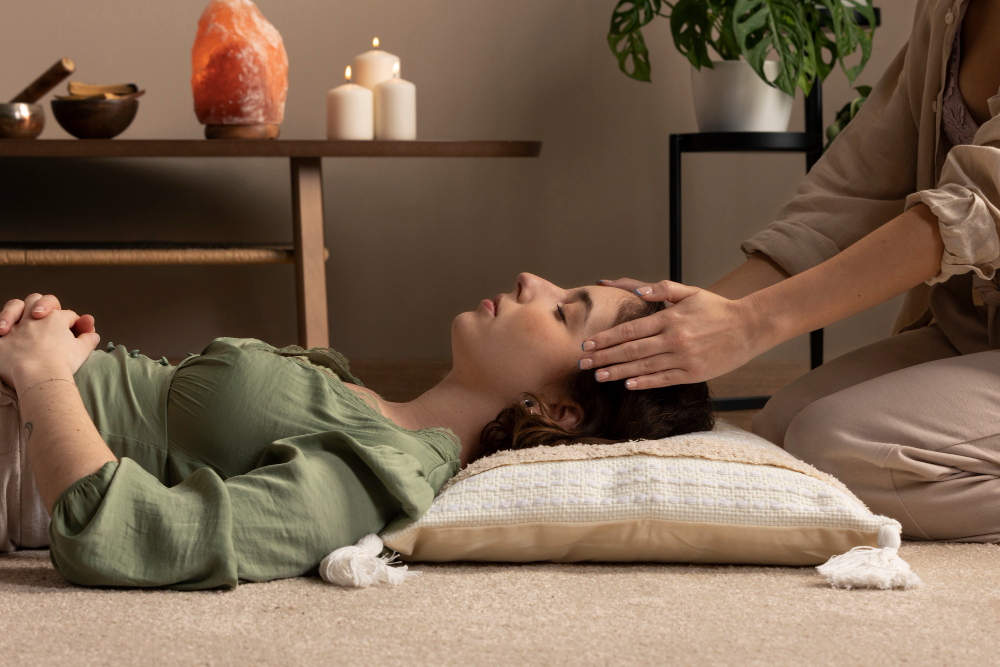
There’s also something harder to put into a study. Cancer treatment can make your body feel like a problem to be managed — poked, scanned, measured, and discussed. An hour of skilled, unhurried, kind touch gives you something different. Clients have described it as feeling whole again. That’s not a small thing.
Michelle
The reason I’m writing this now is that we can finally offer it.
Michelle joined us this fall after 31 years as a licensed massage therapist, 17 of them treating children and adults with massage and reflexology at Mass General Cancer Center. She works with people currently in treatment, people who finished years ago, and people who assumed they’d never be able to get a massage again. She has particular experience with clients who’ve had a mastectomy.
If you’ve been carrying around a vague sense that massage is off the table for you, it’s worth a conversation with her.
Before you book
Talk to your oncology team first. They know your specifics — where you are in treatment, what you’ve had done, anything that needs working around — and a good oncology massage therapist wants that information. Michelle will ask about it anyway.
And if anything changes between appointments, tell her. The adjustments get made based on where you are right now, not where you were three months ago.
Ready to book?
We only have two treatment rooms, so booking ahead is the best way to get the time you want. Book an appointment online or give us a call. If you’re not sure where to start or you have questions before you commit, just reach out and ask.
Shelley Doherty – Owner, Oasis Day Spa